How to Pronounce Medical Words: 35+ Common Terms With IPA
Learn how to pronounce medical words with IPA, syllable breaks and simple patterns. From pneumonia to esophagus, say health terms clearly at the doctor's.
In this article 13 sections
- 01Why medical words feel so hard
- 02Six patterns that make medical words easier
- 03Illnesses and symptoms
- 04Body parts
- 05Medicines and treatments
- 06Doctors and specialists
- 07Everyday health words
- 08British spellings
- 09Useful phrases for the doctor’s
- 10A 10-minute practice plan
- 11Mistakes to avoid
- 12Questions people ask
- 13Try three words now
You’re at the doctor’s, and you need to say “bronchitis.” Or you’re reading a health leaflet and hit “esophagus.” Medical words look long and scary, and they’re easy to mispronounce. But they follow clear patterns, and once you learn those, a lot of them get much easier. This guide shows you how to pronounce medical words, with IPA, syllable breaks and simple respellings. It covers illnesses, body parts, medicines and specialists, plus a few phrases you can use at the doctor’s.
This page is a pronunciation guide only. It isn’t medical advice. If you’re worried about your health, please talk to a doctor or pharmacist.

Why medical words feel so hard
Most medical terms come from Greek and Latin, so their spelling doesn’t match normal English sounds. You’ll see silent letters (“pneumonia”), unusual letter pairs (“diarrhea”) and long endings (“anesthesiologist”).
The good news is that the same parts keep coming back. Learn a few, and you can read hundreds of words.
Six patterns that make medical words easier
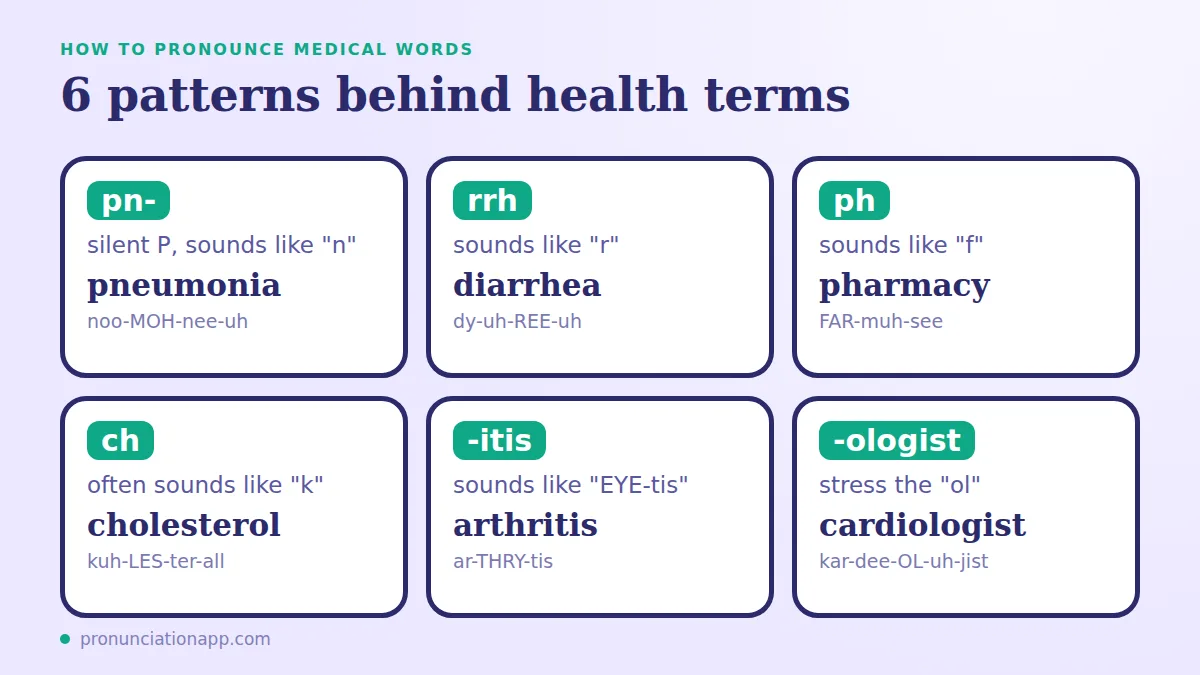
| Pattern | Sounds like | Examples |
|---|---|---|
| pn- at the start | silent P, just “n” | pneumonia /nuːˈmoʊniə/ |
| rrh | “r” (the H is silent) | diarrhea /ˌdaɪəˈriːə/, hemorrhage /ˈhemərɪdʒ/ |
| ph | “f” | pharmacy /ˈfɑːrməsi/, pharynx /ˈfærɪŋks/ |
| ch | often “k” | cholesterol /kəˈlestərɔːl/, stomach /ˈstʌmək/, ache /eɪk/ |
| -itis | “EYE-tis” | arthritis /ɑːrˈθraɪtɪs/, bronchitis /brɑːŋˈkaɪtɪs/ |
| -ologist | stress the “ol” | cardiologist /ˌkɑːrdiˈɑːlədʒɪst/ |
If silent letters are new to you, our guide to silent letters in English explains where they come from.
Illnesses and symptoms
| Word | IPA (US) | Say it like |
|---|---|---|
| pneumonia | /nuːˈmoʊniə/ | noo-MOH-nee-uh |
| diarrhea | /ˌdaɪəˈriːə/ | dy-uh-REE-uh |
| asthma | /ˈæzmə/ | AZ-muh |
| arthritis | /ɑːrˈθraɪtɪs/ | ar-THRY-tis |
| bronchitis | /brɑːŋˈkaɪtɪs/ | brong-KY-tis |
| diabetes | /ˌdaɪəˈbiːtiːz/ | dy-uh-BEE-teez |
| migraine | /ˈmaɪɡreɪn/ | MY-grayn |
| insomnia | /ɪnˈsɑːmniə/ | in-SOM-nee-uh |
| sciatica | /saɪˈætɪkə/ | sy-AT-ih-kuh |
| tonsillitis | /ˌtɑːnsəˈlaɪtɪs/ | ton-suh-LY-tis |
| laryngitis | /ˌlærɪnˈdʒaɪtɪs/ | lair-in-JY-tis |
| hemorrhage | /ˈhemərɪdʒ/ | HEM-or-ij |
A couple of notes. “Asthma” has a silent “th,” so it sounds like “AZ-muh.” And “migraine” can also be /ˈmiːɡreɪn/ (“MEE-grayn”), which is common in American English.
Body parts
| Word | IPA (US) | Say it like |
|---|---|---|
| esophagus | /ɪˈsɑːfəɡəs/ | ih-SOF-uh-gus |
| abdomen | /ˈæbdəmən/ | AB-duh-mun |
| pancreas | /ˈpæŋkriəs/ | PAN-kree-us |
| larynx | /ˈlærɪŋks/ | LAIR-inks |
| trachea | /ˈtreɪkiə/ | TRAY-kee-uh |
“Abdomen” can also be /æbˈdoʊmən/, with the stress on the second syllable. Both are correct.
Medicines and treatments
| Word | IPA (US) | Say it like |
|---|---|---|
| ibuprofen | /ˌaɪbjuːˈproʊfən/ | eye-byoo-PROH-fen |
| acetaminophen | /əˌsiːtəˈmɪnəfən/ | uh-see-tuh-MIN-uh-fen |
| penicillin | /ˌpenɪˈsɪlɪn/ | pen-ih-SIL-in |
| antibiotic | /ˌæntibaɪˈɑːtɪk/ | an-tee-by-OT-ik |
| epinephrine | /ˌepɪˈnefrɪn/ | ep-ih-NEF-rin |
| vaccine | /vækˈsiːn/ | vak-SEEN |
| prescription | /prɪˈskrɪpʃn/ | prih-SKRIP-shun |
| cholesterol | /kəˈlestərɔːl/ | kuh-LES-ter-all |
Some medicines have different names in the US and UK. “Acetaminophen” is called “paracetamol” in the UK, /ˌpærəˈsiːtəmɒl/. “Epinephrine” is called “adrenaline,” /əˈdrenəlɪn/. And in British English, “vaccine” is usually /ˈvæksiːn/, with the stress on the first syllable.
Want to hear how this sounds right now? Type any word into the Free Pronunciation Tool and listen to it in 4 accents.
Doctors and specialists
| Word | IPA (US) | Say it like |
|---|---|---|
| cardiologist | /ˌkɑːrdiˈɑːlədʒɪst/ | kar-dee-OL-uh-jist |
| dermatologist | /ˌdɜːrməˈtɑːlədʒɪst/ | dur-muh-TOL-uh-jist |
| gynecologist | /ˌɡaɪnəˈkɑːlədʒɪst/ | guy-nuh-KOL-uh-jist |
| psychiatrist | /saɪˈkaɪətrɪst/ | sy-KY-uh-trist |
| pediatrician | /ˌpiːdiəˈtrɪʃn/ | pee-dee-uh-TRISH-un |
| anesthesiologist | /ˌænəsˌθiːziˈɑːlədʒɪst/ | an-us-thee-zee-OL-uh-jist |
| ophthalmologist | /ˌɑːfθælˈmɑːlədʒɪst/ | off-thal-MOL-uh-jist |
For the words ending in “-ologist,” the main stress falls on the “ol” syllable just before the ending. Learn that one rule, and you can say most of them. To see why, read our guide to word stress in English.
Everyday health words
| Word | IPA (US) | Say it like |
|---|---|---|
| stethoscope | /ˈsteθəskoʊp/ | STETH-uh-skohp |
| symptom | /ˈsɪmptəm/ | SIMP-tum |
| pharmacy | /ˈfɑːrməsi/ | FAR-muh-see |
British spellings
If you’re reading UK material, you’ll see slightly different spellings. The sounds are mostly the same.
| American | British | Sounds the same? |
|---|---|---|
| esophagus | oesophagus | UK often /iːˈsɒfəɡəs/ |
| pediatrician | paediatrician | Yes |
| anesthesia | anaesthesia | Yes |
| hemorrhage | haemorrhage | Yes |
| diarrhea | diarrhoea | Yes |
For more on the difference between the two accents, see American vs British pronunciation.
Useful phrases for the doctor’s
Practise saying these slowly, then at normal speed.
- “I think I have bronchitis.” /aɪ θɪŋk aɪ hæv brɑːŋˈkaɪtɪs/
- “I’ve had a migraine since yesterday.” /aɪv hæd ə ˈmaɪɡreɪn sɪns ˈjestərdeɪ/
- “I’m allergic to penicillin.” /aɪm əˈlɜːrdʒɪk tə ˌpenɪˈsɪlɪn/
- “Can I get a prescription for this?” /kæn aɪ ɡet ə prɪˈskrɪpʃn fɔːr ðɪs/
- “My stomach hurts, and I have diarrhea.” /maɪ ˈstʌmək hɜːrts ənd aɪ hæv ˌdaɪəˈriːə/
If you’re nervous, it’s completely fine to write a word down or point to it. Doctors and pharmacists would always rather understand you clearly than hear a perfect accent.
A 10-minute practice plan
- Pick five words from one table.
- Listen to each in the tool, three times, then once slowly. For help with how to use it, see pronunciation audio online.
- Break each word into syllables and find the stressed one.
- Check the IPA. If the symbols are new, start with how to read IPA.
- Say each word five times, then in a phrase from the list above.
- Record yourself and compare it with the audio.
For more lists of hard words, see our guide on how to pronounce English words online, and if you’re unsure how a particular word sounds, use a word pronouncer.
Mistakes to avoid
- Saying the silent P in “pneumonia.” It starts with “noo.”
- Saying “th” in “asthma.” It’s “AZ-muh.”
- Reading “ch” as “ch” in “cholesterol” and “stomach.” It’s a “k” sound.
- Putting the stress on the wrong syllable in “-ologist” words.
- Guessing instead of checking. With medicines especially, check the audio.
- Being afraid to ask. If a pharmacist or doctor says a word you don’t know, ask them to repeat it.
Questions people ask
How do you pronounce pneumonia?
noo-MOH-nee-uh, in IPA /nuːˈmoʊniə/. The “p” is silent.
How do you pronounce esophagus?
ih-SOF-uh-gus, in IPA /ɪˈsɑːfəɡəs/. The stress is on the second syllable.
How do you pronounce cholesterol?
kuh-LES-ter-all, in IPA /kəˈlestərɔːl/. The “ch” sounds like “k.”
Why are medical words so hard to pronounce?
Most come from Greek and Latin, and their spellings don’t follow regular English rules. Learning the common patterns, like “ph” and “-itis,” makes many of them easier.
Are American and British medical pronunciations different?
Mostly the same, with a few differences in stress and some medicine names. For example, “vaccine” and “paracetamol” vs “acetaminophen.”
Should I worry if I mispronounce a medical word?
No. Doctors and pharmacists hear all kinds of accents. If you’re unsure, say the word slowly, spell it, or show it written down.
Try three words now
Pick three words from this page that you’ve had trouble with. Type each into the tool, listen three times and say them out loud. Then read the phrase list, and say one of the sentences as if you were talking to a doctor.
Want to hear how this sounds right now? Type any word into the Free Pronunciation Tool and listen to it in 4 accents.
Paste any sentence from this guide into the free tool, hear it in four accents and get instant feedback on your pronunciation.