How to Practice English Speaking Alone
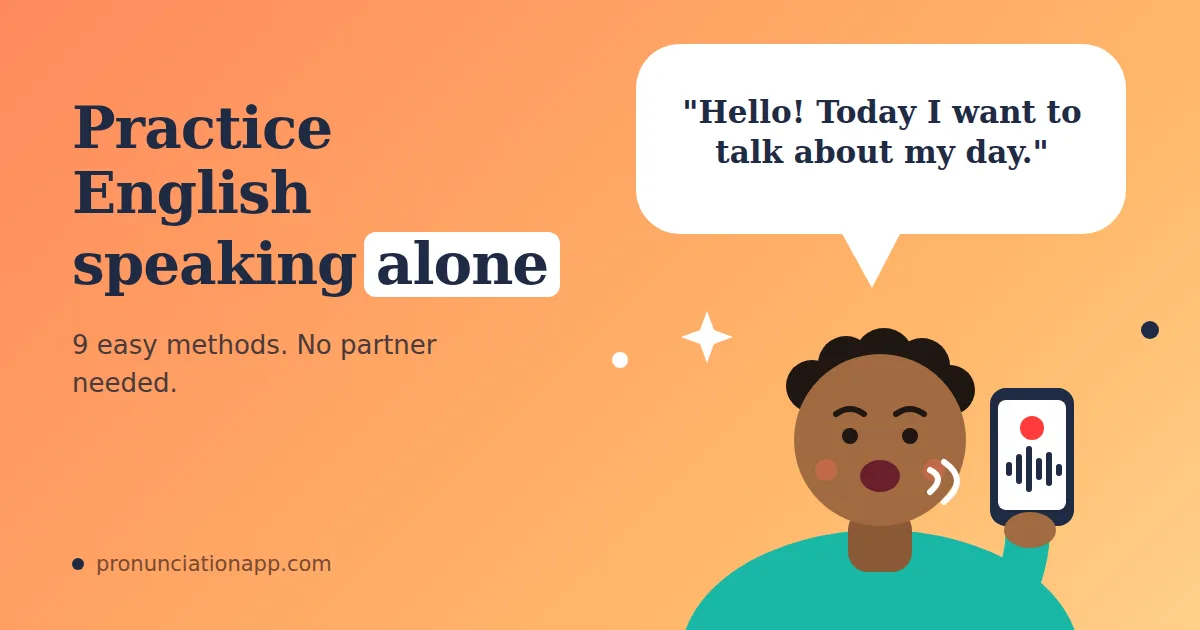
Learn how to practice English speaking alone with 9 simple methods, from shadowing to recording yourself, plus a weekly plan and 10 speaking prompts.
In this article 8 sections
How to Practice English Speaking Alone: 9 Easy Methods
“I’d practise speaking, but I don’t have anyone to talk to.” That’s the most common reason people give for not practising, and it’s a fair one. But you don’t need a partner to get better at speaking. You need your voice, a bit of time and a few good habits. This guide shows you how to practice English speaking alone, step by step, with methods you can start today.
Why speaking alone works
Speaking is a physical skill, a bit like playing an instrument. Your tongue, lips and jaw need practice making English sounds, and they don’t care whether anyone is listening. Practising alone also has a few perks: no one is judging you, you can repeat as often as you like, and you can practise at 11 p.m. in your pyjamas.
What you lose is feedback from another person. The methods below fix that by giving you ways to check yourself.
How to practice English speaking alone: 9 methods that work
1. Talk to yourself out loud
It sounds silly, but it works. Describe what you’re doing as you do it: “I’m making tea. I’m putting the kettle on. I need a spoon.” Narrate your walk, your cooking, your commute.
This trains you to find words quickly, which is exactly what real conversation needs. If you get stuck on a word, write it down and look it up later.
2. Shadow native speakers
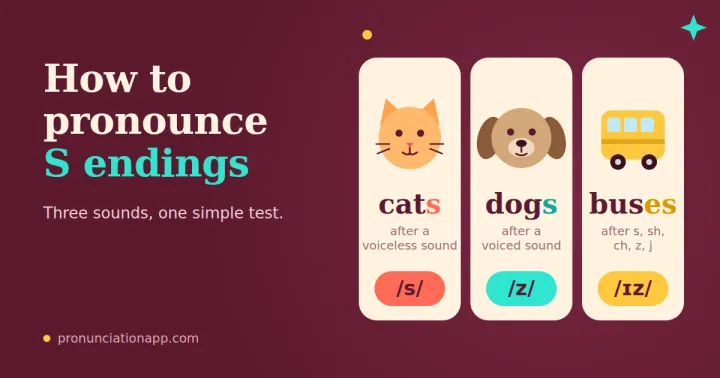
Shadowing means playing a short audio clip and speaking along with it, copying the speed, rhythm and tune. Pick a 20 to 30 second clip, play one sentence, then say it at the same time as the speaker.
We explain the full routine in our guide to how to reduce your accent. Five minutes a day is enough.
3. Record yourself and listen back
Nobody enjoys this part. Do it anyway. Record yourself reading a short paragraph or answering a question, then listen with fresh ears.
You’ll notice things you can’t hear while talking: swallowed endings, flat stress, a sound that isn’t quite right. Keep your first recording and compare it to one from a month later. That comparison is very motivating.
4. Read aloud every day
Take a news article, a page from a book or even a text message and read it out loud. Reading aloud isn’t the same as natural speaking, but it’s great for practising sounds and rhythm.
Pick a paragraph, read it slowly, then read it again a little faster and smoother. Mark any word you stumbled on.
5. Check words before you say them
Don’t guess. When you’re unsure how a word sounds, look it up. A word pronouncer lets you hear it right away, so you practise the right version instead of repeating a mistake.
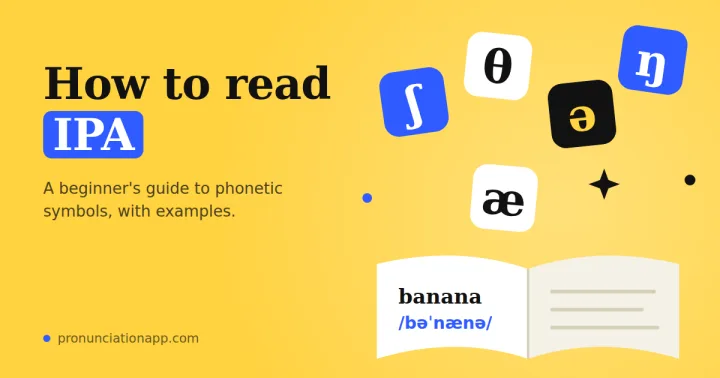
You can also pronounce English words online and compare accents, then say the word back to yourself. If you want to see how a word is written in sounds, our guide to how to read IPA will help.
Want to hear how this sounds right now? Type any word into the Free Pronunciation Tool and listen to it in 4 accents.
6. Describe pictures and objects
Look around the room and describe what you see for one minute. “There’s a lamp on the table. It’s next to a blue book. The curtains are half open.”
Or open any photo on your phone and describe it as if you were telling a friend: who’s in it, where it was taken, what happened. It’s a simple way to practise vocabulary and sentence building.
7. Answer speaking prompts
Prompts give you something to talk about when your mind goes blank. Set a timer for one to two minutes and answer out loud. Here are ten to start with:
- What did you do yesterday?
- Describe your best friend.
- What’s your favourite meal, and how do you make it?
- Where would you most like to travel, and why?
- What’s the best thing that happened to you this month?
- Explain how to get from your home to the nearest shop.
- What do you do to relax?
- What would you change about your town?
- Tell the story of a funny thing that happened to you.
- What are your goals for the next year?
8. Practise full phrases, not just single words
Native speakers don’t speak in single words. They use chunks like “I was wondering if,” “to be honest,” “it depends on,” and “as far as I know.”
Learn five new chunks a week, and say each one in three different sentences. It makes your speech smoother and less choppy.
9. Use your phone’s voice typing as a rough check
Open a notes app, tap the microphone and speak in English. If the text on screen matches what you said, you’re probably clear. If it gets words wrong, that’s a hint to repeat them more clearly.
Take this with a pinch of salt, though. Voice typing can mishear clear speech and guess well on unclear speech, so use it as a rough guide, not a judge.
Pay attention to rhythm, not only sounds
When you practise alone, it’s easy to focus on single sounds and forget the beat of English. Stress and weak syllables matter just as much. Take a look at our guides to word stress in English and the schwa sound, and try to apply them in your daily speaking.
If a particular pair of sounds trips you up, practise it with minimal pairs in English.
A simple weekly plan
You don’t need hours. Here’s a plan that takes about 15 minutes a day:
| Day | What to do | Time |
|---|---|---|
| Monday | Talk through your day out loud | 10 min |
| Tuesday | Shadow one short clip | 15 min |
| Wednesday | Read aloud and mark hard words | 15 min |
| Thursday | Answer two speaking prompts | 15 min |
| Friday | Record yourself and listen back | 15 min |
| Saturday | Describe pictures and learn five phrases | 15 min |
| Sunday | Rest, or compare this week’s recording to last week’s | 5 min |
If you miss a day, don’t worry. Just pick up where you left off.
Mistakes to avoid
- Practising silently. Reading in your head doesn’t train your mouth. Say it out loud.
- Waiting until you feel ready. You won’t feel ready. Start with imperfect English.
- Only learning words, never saying them. If you haven’t said a word aloud, you don’t know it yet.
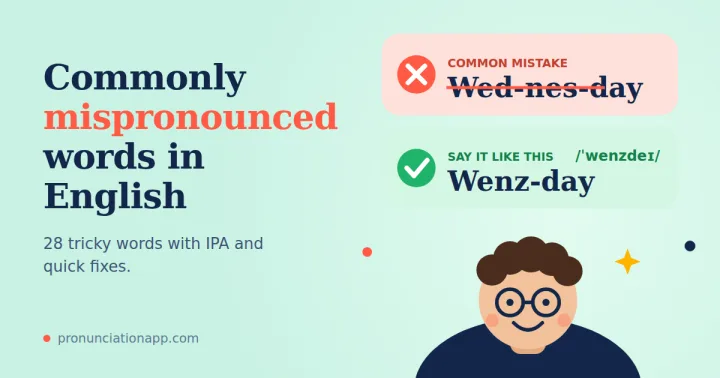
- Not checking pronunciation. Practising a wrong sound ten times just makes it a stronger habit. Check new words with a pronunciation audio tool first.
- Being too hard on yourself. Mistakes are how you learn. Keep going.
Questions people ask
Can I really improve my English speaking without a partner?
Yes. You can build fluency, clearer pronunciation and confidence on your own. A partner is useful later for real conversation practice, but it isn’t required to start.
How long should I practise each day?
Fifteen minutes of focused practice is better than an hour once a week. Short, regular sessions work best.
What should I say when I don’t know what to talk about?
Use prompts, describe what’s around you, or narrate your day. Anything works, because the goal is to keep your mouth moving in English.
How do I know if my pronunciation is correct?
Compare yourself with audio. Record a sentence, listen to a native recording, and see where they differ. A tool that lets you hear words in different accents makes this much easier.
Is it okay to talk to myself?
It’s one of the best ways to practise, and plenty of fluent speakers do it. Just keep it to your own space if that feels more comfortable.
Start with two minutes
You don’t need a perfect plan. Right now, look around, pick one object, and describe it out loud for one minute. Then record yourself saying your name and one thing you did today, and listen back.
That’s a real speaking session, and it took two minutes. Do it again tomorrow.
Want to hear how this sounds right now? Type any word into the Free Pronunciation Tool and listen to it in 4 accents.
Paste any sentence from this guide into the free tool, hear it in four accents and get instant feedback on your pronunciation.