How to Pronounce Bible Names: 35+ Hard Names With IPA
Learn how to pronounce Bible names like Nebuchadnezzar, Habakkuk and Gethsemane, with IPA, syllable breaks and patterns for hard names, books and places.
In this article 14 sections
- 01How to pronounce Bible names: six patterns
- 02Old Testament people
- 03Prophets and their books
- 04Books of the Law
- 05New Testament people
- 06New Testament letters
- 07Places
- 08Words from the Bible
- 09Why Bible names are so hard to say
- 10Practise in a sentence
- 11A 10-minute practice plan
- 12Mistakes to avoid
- 13Questions people ask
- 14Try three names now
You’ve been asked to read aloud at a service, or you’re reading along in a study group, and then you see it: “Nebuchadnezzar.” Or “Habakkuk.” Or “Melchizedek.” Your voice slows down while you try to work it out. You’re not alone. Bible names come from Hebrew, Aramaic and Greek, and they were adapted into English over centuries. This guide shows you how to pronounce Bible names with IPA and simple respellings, grouped into people, books, places and words, plus patterns that help you with names you haven’t seen yet.
One note first. Pronunciations vary between churches, translations, countries and traditions. I’ve given the most common US English version, and flagged where there’s more than one. If your community uses a different version, follow that.
How to pronounce Bible names: six patterns
Learn these, and you can make a good guess at many names you’ve never seen.
| Pattern | Sounds like | Examples |
|---|---|---|
| -iah at the end | “EYE-uh” | Isaiah, Jeremiah, Nehemiah, Obadiah |
| ch | often “k” | Zechariah, Melchizedek |
| ae | “ee” | Zacchaeus, Bartimaeus |
| -ians (books) | “ee-unz” or “zhunz” | Ephesians, Philippians |
| th | “th,” not “t” | Gethsemane, Thessalonians |
| Long names | chunk them, then stress | Nebuchadnezzar |
Old Testament people
| Name | IPA (US) | Say it like |
|---|---|---|
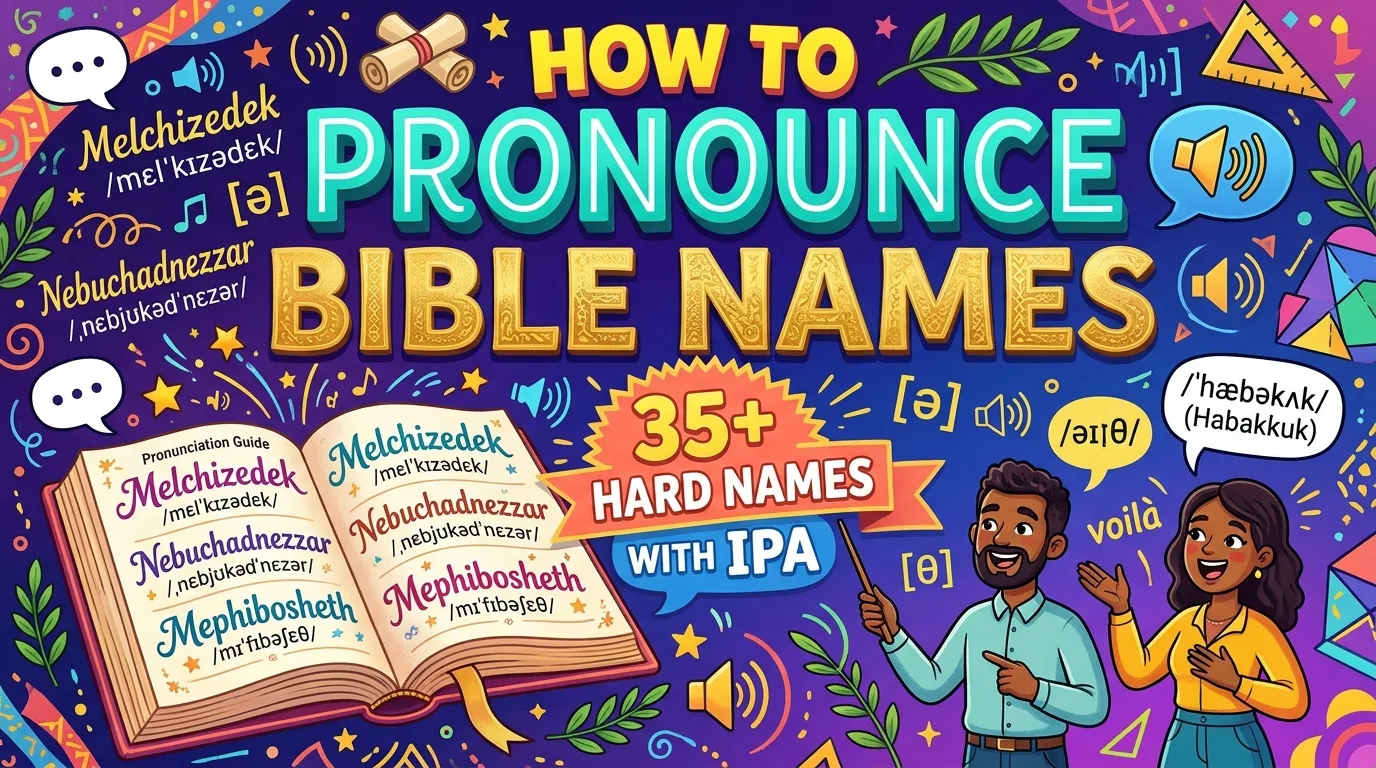
| Nebuchadnezzar | /ˌnebjəkədˈnezər/ | neb-yuh-kud-NEZ-er |
| Habakkuk | /həˈbækək/ | huh-BAK-uk |
| Melchizedek | /melˈkɪzədek/ | mel-KIZ-uh-dek |
| Methuselah | /məˈθuːzələ/ | muh-THOO-zuh-luh |
| Gideon | /ˈɡɪdiən/ | GID-ee-un |
| Shadrach | /ˈʃædræk/ | SHAD-rak |
| Meshach | /ˈmiːʃæk/ | MEE-shak |
| Abednego | /əˈbednɪɡoʊ/ | uh-BED-nih-goh |
The tough one is “Nebuchadnezzar.” Break it into chunks: neb-yuh-kud-NEZ-er. The stress falls on “NEZ,” and the middle syllables are quick and light.
Prophets and their books
| Name | IPA (US) | Say it like |
|---|---|---|
| Isaiah | /aɪˈzeɪə/ | eye-ZAY-uh |
| Jeremiah | /ˌdʒerəˈmaɪə/ | jair-uh-MY-uh |
| Ezekiel | /ɪˈziːkiəl/ | ih-ZEE-kee-ul |
| Hosea | /hoʊˈzeɪə/ | hoh-ZAY-uh |
| Zechariah | /ˌzekəˈraɪə/ | zek-uh-RY-uh |
| Nehemiah | /ˌniːəˈmaɪə/ | nee-uh-MY-uh |
| Obadiah | /ˌoʊbəˈdaɪə/ | oh-buh-DY-uh |
Notice that most names ending in “-iah” end with the sound “EYE-uh,” and the stress sits on the syllable just before it.
Books of the Law
| Name | IPA (US) | Say it like |
|---|---|---|
| Leviticus | /ləˈvɪtɪkəs/ | luh-VIT-ih-kus |
| Deuteronomy | /ˌduːtəˈrɑːnəmi/ | doo-tuh-RON-uh-mee |
“Deuteronomy” has five syllables, so say it slowly at first: doo-tuh-RON-uh-mee.
Want to hear how this sounds right now? Type any word into the Free Pronunciation Tool and listen to it in 4 accents.
New Testament people
| Name | IPA (US) | Say it like |
|---|---|---|
| Zacchaeus | /zæˈkiːəs/ | zak-EE-us |
| Bartimaeus | /ˌbɑːrtɪˈmiːəs/ | bar-tih-MEE-us |
| Barnabas | /ˈbɑːrnəbəs/ | BAR-nuh-bus |
| Philemon | /fɪˈliːmən/ | fih-LEE-mun |
In “Zacchaeus” and “Bartimaeus,” the “ae” sounds like “ee,” and the stress is on that syllable.
New Testament letters
| Name | IPA (US) | Say it like |
|---|---|---|
| Thessalonians | /ˌθesəˈloʊniənz/ | thes-uh-LOH-nee-unz |
| Colossians | /kəˈlɑːʃənz/ | kuh-LOSH-unz |
| Ephesians | /ɪˈfiːʒənz/ | ih-FEE-zhunz |
| Philippians | /fɪˈlɪpiənz/ | fih-LIP-ee-unz |
| Galatians | /ɡəˈleɪʃənz/ | guh-LAY-shunz |
| Corinthians | /kəˈrɪnθiənz/ | kuh-RIN-thee-unz |
These all end in “-ians,” but the sound before it changes. “Ephesians” has a “zh” sound, like the middle of “measure.” “Colossians” and “Galatians” have “sh.” And “Philippians” and “Corinthians” keep a clear “ee” sound. The only way to be sure is to learn each one.
Places
| Place | IPA (US) | Say it like |
|---|---|---|
| Bethlehem | /ˈbeθlɪhem/ | BETH-lih-hem |
| Nazareth | /ˈnæzərəθ/ | NAZ-uh-reth |
| Capernaum | /kəˈpɜːrneɪəm/ | kuh-PER-nay-um |
| Golgotha | /ˈɡɑːlɡəθə/ | GOL-guh-thuh |
| Gethsemane | /ɡeθˈseməni/ | geth-SEM-uh-nee |
| Jerusalem | /dʒəˈruːsələm/ | juh-ROO-suh-lum |
“Gethsemane” begins with a hard G and a real “th”: geth-SEM-uh-nee. If “th” is hard for you, see our guide to how to pronounce th.
Words from the Bible
| Word | IPA (US) | Say it like |
|---|---|---|
| Beelzebub | /biˈelzəbʌb/ | bee-EL-zuh-bub |
| Pharisee | /ˈferɪsiː/ | FAIR-ih-see |
| Samaritan | /səˈmerɪtn/ | suh-MAIR-ih-tun |
| Sabbath | /ˈsæbəθ/ | SAB-uth |
| Hallelujah | /ˌhæləˈluːjə/ | hal-uh-LOO-yuh |
| Armageddon | /ˌɑːrməˈɡedn/ | ar-muh-GED-un |
Two quick notes. “Pharisee” starts with an “f” sound, because “ph” is /f/ in English. And “Hallelujah” is often spelled “Alleluia,” which is pronounced a little differently: /ˌæləˈluːjə/.
Why Bible names are so hard to say
Three reasons:
- They come from other languages. Hebrew, Aramaic and Greek sounds don’t match English spelling.
- They were adapted over time. English translations kept the older spellings, even as the sounds changed.
- They have unusual letter combinations. Names like “Habakkuk” and “Nebuchadnezzar” look like strings of consonants.
The good news is that once you split a long name into chunks and find the stress, they become much easier. We explain how in our guide to word stress in English.
Practise in a sentence
Say these three sentences slowly, then at normal speed:
- “Isaiah and Jeremiah were prophets.”
- “Nebuchadnezzar ruled in Babylon.”
- “The story goes from Nazareth to Bethlehem and then to Jerusalem.”
For long names, break them into chunks first. For example, “neb-yuh-kud-NEZ-er.” Then join the chunks, and speed up a little.
A 10-minute practice plan
- Pick five names you’ll actually need to read.
- Listen to each in the tool, three times, then once slowly. For help with the tool, see pronunciation audio online.
- Break each name into syllables and find the stressed one.
- Check the IPA. If the symbols are new, see how to read IPA.
- Say each name five times, then in a sentence.
- Record yourself and compare it with the audio.
For longer word lists, see how to pronounce English words online, and use a word pronouncer whenever you’re unsure. For similar guides, see our lists of famous names and place names.
Mistakes to avoid
- Saying “ch” as in “chair” in “Zechariah” and “Melchizedek.” It’s a “k” sound.
- Dropping syllables in “Deuteronomy” and “Nebuchadnezzar.”
- Putting the stress in the wrong place in “-iah” names. It falls on the syllable before “-iah.”
- Assuming one version is the only right one. Different traditions say some names differently.
- Guessing instead of checking. A few seconds with the audio is enough.
Questions people ask
How do you pronounce Nebuchadnezzar?
neb-yuh-kud-NEZ-er, in IPA /ˌnebjəkədˈnezər/.
How do you pronounce Habakkuk?
huh-BAK-uk, in IPA /həˈbækək/. Some speakers also say “HAB-uh-kuk.”
How do you pronounce Melchizedek?
mel-KIZ-uh-dek, in IPA /melˈkɪzədek/.
How do you pronounce Gethsemane?
geth-SEM-uh-nee, in IPA /ɡeθˈseməni/.
Why do some Bible names have more than one pronunciation?
Because they’ve been adapted from other languages, and different churches, translations and countries have settled on slightly different versions.
Is there one correct way to say Bible names?
Not always. For many names, more than one version is in use. If you’re reading in a group, it’s helpful to follow the version your community uses.
Try three names now
Pick three names from this page that you’ve found hard. Type each into the tool, listen three times and say them out loud. Then say one of the practice sentences as if you were reading to a group.
Want to hear how this sounds right now? Type any word into the Free Pronunciation Tool and listen to it in 4 accents.
Paste any sentence from this guide into the free tool, hear it in four accents and get instant feedback on your pronunciation.